Teeth Grinding at Night: Signs & Care | EndoCare Dental Clinic, Viman Nagar Pune
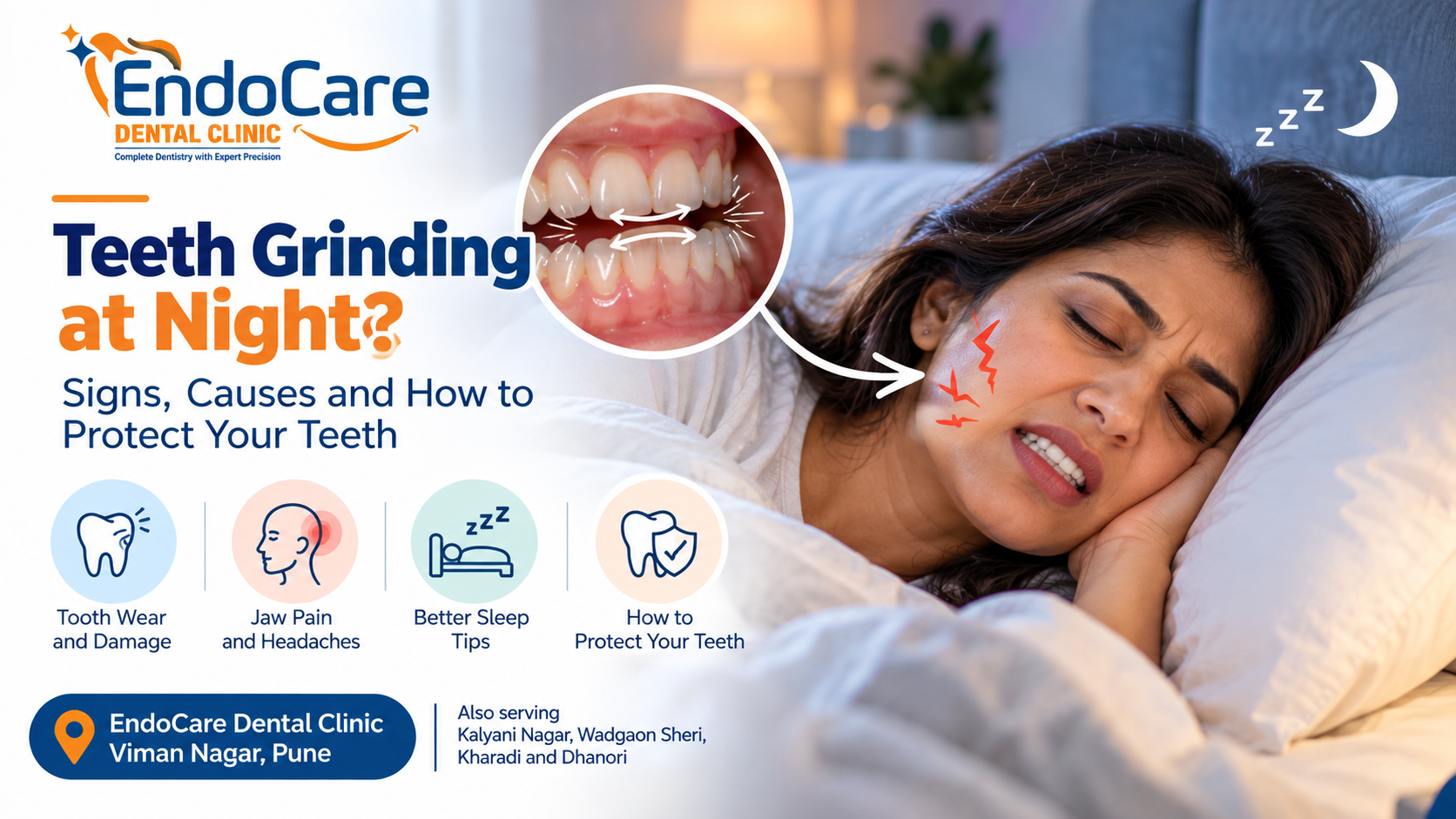
eeth Grinding at Night: Signs, Causes and How to Protect Your Teeth
Do you wake up with a tight jaw, tired facial muscles or a headache around your temples? Has someone told you that you grind your teeth while sleeping?
These symptoms can sometimes be associated with bruxism, the medical term for clenching or grinding your teeth. It can happen while you are awake or asleep, and some people are unaware of the habit until a dentist identifies signs of tooth wear.
Occasional clenching does not necessarily mean you have a serious dental problem. However, frequent or forceful grinding can contribute to tooth damage, sensitivity, jaw discomfort and problems with existing dental restorations.
Understanding the possible warning signs can help you decide when to seek professional advice.
If you live in Viman Nagar, Pune, or nearby areas such as Kalyani Nagar, Wadgaon Sheri, Kharadi or Dhanori, this guide explains what nighttime teeth grinding means, why it may happen, and what you can do to protect your oral health.
In This Article
Explore the topics covered in this guide:
- What Is Teeth Grinding at Night?
- Seven Signs You May Be Grinding Your Teeth
- What Causes Teeth Grinding During Sleep?
- Can Nighttime Grinding Damage Your Teeth?
- How to Protect Your Teeth at Home
- Do You Need a Night Guard for Teeth Grinding?
- When Should You See a Dentist?
- Teeth Grinding in Viman Nagar, Pune
- Frequently Asked Questions
What Is Teeth Grinding at Night?
Teeth grinding, or bruxism, involves clenching the teeth together or rubbing them against each other.
It can occur in two main forms.
Awake bruxism
Awake bruxism involves clenching or grinding your teeth while you are conscious.
You might notice that your jaw tightens when you are concentrating, working under pressure or feeling stressed. Some people hold their teeth together without realising it.
Becoming aware of this habit can help you make changes to your jaw posture during the day.
Sleep bruxism
Sleep bruxism occurs while you are asleep.
You may not know it is happening unless someone hears grinding sounds during the night or you notice symptoms such as jaw discomfort, headaches or damaged teeth.
Sleep bruxism is associated with sleep-related activity. Its causes are not fully understood, and it should not automatically be attributed to stress alone. Mayo Clinic
The important distinction is that not everyone who clenches their teeth needs treatment. The frequency of grinding, symptoms, tooth damage and other relevant findings help determine whether intervention is appropriate.
Seven Signs You May Be Grinding Your Teeth
Nighttime teeth grinding can be difficult to identify because it happens while you are asleep. However, certain symptoms may provide clues.
1. You wake up with a tight or tired jaw
If your jaw muscles feel tired or tense when you wake up, nighttime clenching may be one possible explanation.
The discomfort may be more noticeable after sleep and improve as the day progresses.
Jaw tightness can also have other causes, so it should not be treated as proof of bruxism.
2. You experience morning headaches
Some people who grind their teeth experience dull headaches around the temples or facial muscles.
However, headaches have many possible causes, including sleep problems, tension and other medical conditions.
If your headaches are recurrent, severe or unexplained, seek appropriate medical advice rather than assuming that tooth grinding is responsible.
3. Your teeth look flatter or more worn
Repeated grinding can wear down tooth surfaces over time.
You might notice that the edges of your front teeth look different or that the chewing surfaces of your back teeth appear flatter.
A dentist can assess whether the wear pattern is consistent with grinding and whether the teeth need monitoring or treatment.
4. You develop unexplained tooth sensitivity
When teeth are worn or damaged, the affected surfaces may become more sensitive.
Sensitivity can also result from cavities, gum recession, cracks and other dental conditions. It is therefore important to establish the cause instead of assuming that grinding is responsible.
5. You notice chipped teeth or damaged restorations
Frequent, forceful grinding may place additional stress on teeth, fillings and crowns.
If you repeatedly chip teeth or damage restorations, tell your dentist about the pattern. The assessment can help determine whether grinding, a bite-related issue or another problem may be contributing.
6. Someone hears grinding sounds while you sleep
A partner or family member may notice grinding or clenching sounds during the night.
This can be a useful clue, particularly when combined with jaw discomfort or tooth wear.
However, the absence of audible grinding does not rule out sleep bruxism.
7. Your jaw feels sore or difficult to move
Some people experience tenderness around the jaw muscles, facial discomfort or difficulty opening their mouth comfortably.
These symptoms can occur with several conditions involving the jaw and surrounding muscles.
Persistent pain, locking or difficulty moving the jaw warrants professional assessment rather than self-diagnosis.
What Causes Teeth Grinding During Sleep?
There is no single explanation for every case of bruxism. Several factors may contribute, and the underlying causes can differ between individuals.
Stress and emotional tension
Stress, anxiety and emotional tension can contribute to awake clenching and may be associated with teeth grinding.
If you notice that you clench your jaw while working or concentrating, becoming aware of the habit may help you reduce unnecessary muscle tension.
However, not all nighttime grinding is caused by stress, and relaxation techniques alone may not resolve every case.
Sleep-related factors
Sleep bruxism can be associated with other sleep-related conditions.
If you also snore heavily, experience pauses in breathing during sleep, or feel excessively sleepy during the day, discuss these symptoms with a healthcare professional. They may warrant assessment for a sleep disorder. Mayo Clinic
A dentist can assess your teeth and jaw, but a suspected sleep disorder may require evaluation by another healthcare professional.
Certain medicines
Some medicines can contribute to teeth grinding in certain people.
If you noticed new clenching or grinding after starting or changing a medicine, discuss the timing with the clinician who prescribed it.
Do not stop or change a prescribed medicine without medical advice.
Caffeine, tobacco and alcohol
Certain lifestyle factors may contribute to bruxism or make it worse in some people.
If you suspect that caffeine, alcohol or tobacco use is affecting your symptoms, consider discussing practical changes with an appropriate healthcare professional.
The effect varies between individuals, and these factors do not explain every case of teeth grinding.
Individual and family factors
Bruxism can occur in different age groups, and family history may be relevant.
Children may grind their teeth during certain stages of development. Persistent symptoms, tooth damage, pain or concerns about sleep should be discussed with a dentist or the child's healthcare professional. Mayo Clinic
Can Nighttime Grinding Damage Your Teeth?
Not everyone who grinds their teeth develops significant damage. However, frequent or forceful grinding can place repeated stress on the teeth and jaw muscles.
Tooth wear and enamel damage
Repeated contact between teeth can gradually wear down their surfaces.
If the wear becomes substantial, the affected teeth may become more vulnerable to sensitivity, chipping or other problems.
Once tooth structure has been lost, it does not naturally grow back. A dentist can assess the extent of the damage and discuss whether monitoring or restorative treatment is appropriate.
Cracked or chipped teeth
Grinding can contribute to stress on teeth, particularly when a tooth is already weakened by decay, a large restoration or an existing crack.
A chipped tooth does not automatically require a crown. The appropriate treatment depends on the amount of damage and the remaining healthy tooth structure.
If you notice a new crack, fracture or persistent pain while chewing, arrange a dental examination.
Damage to fillings and crowns
Existing restorations may experience additional stress during repeated clenching or grinding.
If fillings or crowns keep chipping, breaking or wearing, your dentist may assess your bite, the condition of the restoration and whether bruxism could be contributing.
Where restoration is needed, the treatment should address the actual damage rather than simply the possibility of grinding.
Jaw muscle discomfort
Repeated clenching may contribute to tired or sore jaw muscles.
However, jaw pain can have multiple causes. A dentist or other appropriate healthcare professional can help determine whether the symptoms are consistent with bruxism or another condition.
The purpose of assessment is to prevent avoidable damage and address symptoms—not to assume that every headache or jaw click is caused by teeth grinding.
How to Protect Your Teeth at Home
Home-care measures may help reduce unnecessary clenching and make associated discomfort easier to manage.
They cannot guarantee that sleep bruxism will stop.
1. Become aware of daytime clenching
When you notice that you are clenching your teeth while awake, relax your jaw.
A useful resting position is to keep your jaw relaxed, with your teeth not held tightly together. Your lips may be gently closed while your teeth remain apart.
You can use occasional reminders during the day to check whether you are tightening your jaw without realising it.
2. Create a calming bedtime routine
If stress or tension appears to contribute to your symptoms, try a consistent wind-down routine before bed.
Quiet activities, gentle relaxation exercises and regular sleep habits may help you manage tension.
These measures support general wellbeing but do not replace assessment when grinding is causing tooth damage or persistent pain.
3. Avoid aggravating a painful jaw
If your jaw is sore, temporarily avoid chewing gum or repeatedly eating very hard foods.
Choose foods that are comfortable to chew and avoid deliberately testing a painful tooth by biting hard objects.
If jaw pain persists or becomes more severe, seek professional advice.
4. Review your caffeine and alcohol habits
If you notice that particular habits coincide with worse symptoms or disrupted sleep, consider whether changes may help.
Avoid making assumptions about the cause of your bruxism based on one factor alone.
If you are concerned about alcohol use, medication effects or a possible sleep disorder, seek suitable healthcare advice.
5. Maintain regular dental check-ups
A dentist can identify signs of tooth wear, assess damaged restorations and check whether your jaw symptoms need further investigation.
Early assessment can help establish a baseline and determine whether monitoring or protective measures are appropriate.
Do You Need a Night Guard for Teeth Grinding?
A night guard, also called an occlusal splint or bite splint, is an appliance worn over the teeth.
A dentist may recommend a suitable appliance when the assessment indicates that protecting the teeth or managing particular symptoms is appropriate.
What does a night guard do?
A properly selected appliance can help protect tooth surfaces from direct contact during grinding.
Depending on the appliance and the individual problem, it may also be part of a plan to manage associated symptoms.
However, a night guard does not necessarily eliminate the underlying activity of grinding. Its suitability and expected benefits depend on the person's symptoms, dental condition and treatment goals. nhs.uk
Should you buy an over-the-counter night guard?
Do not assume that every commercially available mouth guard is appropriate for your teeth.
Fit, comfort, dental restorations, bite and the reason for using the appliance all matter.
If you have jaw pain, damaged teeth or an existing dental condition, ask a dentist before choosing a guard.
A poorly fitting or unsuitable appliance may be uncomfortable or inappropriate for your situation.
Does everyone who grinds their teeth need a night guard?
No.
The decision depends on whether grinding is causing damage or symptoms and whether a protective appliance is suitable.
Some people may need monitoring and behavioural changes, while others may benefit from a professionally selected appliance or further assessment.
Important for patients: If you have jaw locking, significant pain, or symptoms suggesting a sleep disorder, a night guard alone may not address the underlying problem.
When Should You See a Dentist?
Arrange a dental assessment if you notice signs that may be associated with nighttime teeth grinding, especially if symptoms are persistent or worsening.
You should seek professional advice if:
- Your teeth are becoming visibly worn.
- You have chipped teeth or repeatedly damaged fillings.
- You experience recurring morning jaw pain.
- You develop persistent tooth sensitivity.
- Someone regularly notices grinding sounds while you sleep.
- Your jaw is painful, locks or becomes difficult to move.
- You are unsure whether a night guard is appropriate.
Seek urgent assessment for a significant dental fracture, severe pain or sudden difficulty opening your mouth. If you develop serious symptoms that interfere with breathing or swallowing, seek emergency medical care.
What happens during a dental assessment?
The dentist may ask about your symptoms, sleep habits, jaw discomfort and any history of damaged teeth or restorations.
An examination may include assessing tooth surfaces, existing fillings and crowns, jaw movement and areas of muscle tenderness.
Dental X-rays may be recommended when clinically indicated, but they are not automatically required for every person with suspected bruxism.
The findings help determine whether monitoring, protective measures, restorative treatment or further medical assessment may be appropriate.
Teeth Grinding in Viman Nagar, Pune
If you wake up with jaw discomfort, notice worn teeth or repeatedly damage dental restorations, an assessment can help establish whether grinding may be contributing to the problem.
When looking for a dentist in Viman Nagar, choose an assessment-led approach that considers the condition of your teeth, jaw symptoms and relevant health factors before recommending treatment.
At EndoCare Dental Clinic, Viman Nagar, Pune, patients can discuss their dental concerns and arrange an appointment to have relevant symptoms assessed.
If grinding has contributed to a chipped tooth, worn restoration or structural damage, the dentist can assess whether restorative treatment is appropriate. Depending on the findings, you may find it helpful to read about:
- Dental Fillings in Viman Nagar — for information about restoring suitable cavities or damaged areas of teeth.
- Dental Crowns and Bridges in Viman Nagar — for information about restoring teeth that require additional coverage.
These treatments are not automatic solutions for bruxism. Their suitability depends on the actual condition of the tooth.
EndoCare Dental Clinic is located in Viman Nagar and serves patients from nearby areas, including Kalyani Nagar, Wadgaon Sheri, Kharadi and Dhanori. These are surrounding service areas, not additional clinic branches.
Book a Dental Consultation at EndoCare Dental Clinic
If you are concerned about teeth grinding, jaw discomfort or repeated damage to your teeth, contact the clinic to discuss an appointment.
EndoCare Dental Clinic | Advanced Dentistry & Root Canal Specialist in Viman Nagar, Pune
- Phone: +91 90968 82602
- Hours: Open all seven days, 10:00 AM–9:00 PM
- Location: Viman Nagar, Pune
Contact EndoCare Dental Clinic
An assessment can help identify signs of tooth damage, explain appropriate options and determine whether further evaluation is needed.
Frequently Asked Questions About Teeth Grinding
1. Why do I grind my teeth at night without knowing it?
Sleep bruxism occurs while you are asleep, so you may not be aware of it. You might notice grinding sounds, worn teeth, jaw discomfort or morning headaches instead. The cause varies and may involve sleep-related activity, individual factors or other contributors.
2. Can teeth grinding cause headaches in the morning?
It can be associated with headaches around the temples or facial muscles. However, morning headaches have many possible causes. Recurrent or severe headaches should be assessed rather than automatically attributed to bruxism.
3. Does a night guard stop teeth grinding?
A night guard can help protect teeth from direct contact during grinding, but it does not necessarily stop the underlying activity. A dentist can assess whether an appliance is appropriate and explain its expected benefits and limitations.
4. Can teeth grinding damage fillings or crowns?
Frequent, forceful grinding can place additional stress on teeth and existing restorations. If you repeatedly chip teeth or damage fillings or crowns, arrange a dental examination to assess the damage and possible contributing factors.
5. When should I see a dentist for teeth grinding in Viman Nagar, Pune?
Arrange an appointment if you have worn or chipped teeth, recurring jaw discomfort, persistent sensitivity or regular grinding sounds during sleep. A dentist can assess your teeth and jaw and explain suitable next steps.
6. Is teeth grinding always caused by stress?
No. Stress can contribute to some forms of clenching, but sleep bruxism has a more complex range of possible contributing factors. If you also snore heavily, experience pauses in breathing during sleep or have significant daytime sleepiness, discuss these symptoms with a healthcare professional.
Conclusion: Protect Your Teeth Before Grinding Causes Further Damage
Teeth grinding at night can be difficult to recognise, particularly when it happens during sleep. Worn teeth, damaged restorations, jaw discomfort and recurring morning symptoms may provide clues that deserve attention.
Not everyone with bruxism needs treatment, and not every headache or sensitive tooth is caused by grinding. The right approach is to identify the symptoms, assess any existing damage and choose appropriate measures based on the findings.
If you are concerned about teeth grinding in Viman Nagar, Pune, contact EndoCare Dental Clinic to arrange an assessment and discuss your dental concerns.
This article is for general educational purposes. It does not replace an individual dental examination, diagnosis or personalised treatment plan.
This article is general information from the EndoCare Dental Clinic team. It is not a diagnosis or a substitute for an examination by your dentist. Please consult a dentist for advice about your own teeth.