Root Canal vs Extraction: Which Is Better?
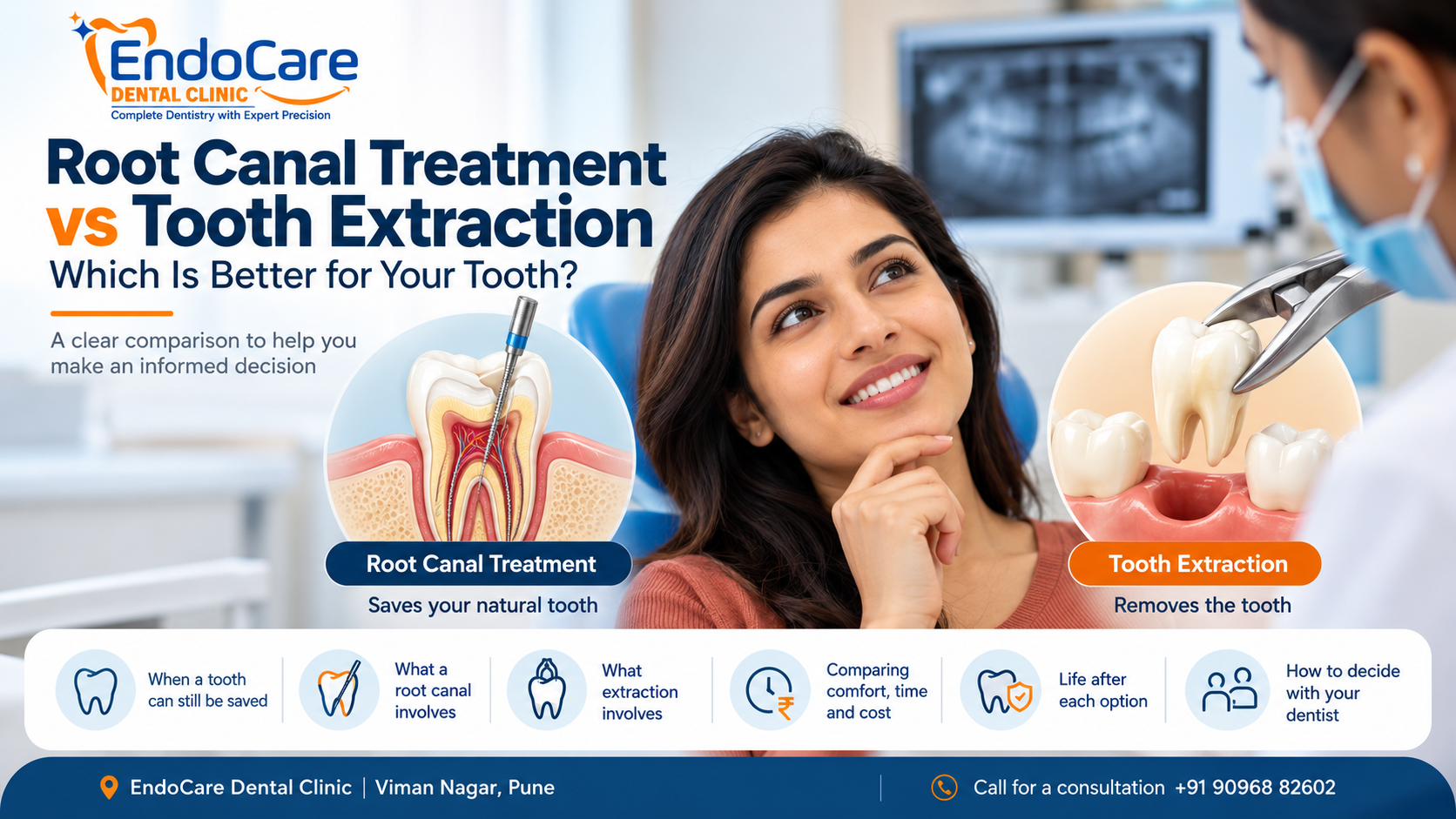
Root Canal Treatment vs Tooth Extraction: Which Is Better for Your Tooth?
When a tooth has deep decay, persistent pain or infection, one important question arises: can the tooth be saved with root canal treatment, or does it need to be removed?
If you are searching for root canal treatment in Viman Nagar, Pune, or considering tooth extraction in Viman Nagar, understanding both options can help you make an informed decision with your dentist.
In many cases, saving a natural tooth is preferable when it can be restored predictably. However, extraction may be necessary when a tooth is too damaged or has insufficient support for successful restoration.
At EndoCare Dental Clinic in Viman Nagar, Pune, the appropriate treatment depends on the condition of the tooth, the surrounding gums and bone, and your overall dental needs.
This article explains the differences between root canal treatment and tooth extraction, including comfort, recovery, cost considerations and life after treatment. It is general educational information, not a substitute for a dental examination.
In This Article
- When a tooth can still be saved
- What root canal treatment involves
- What tooth extraction involves
- Comparing comfort, treatment time and cost
- Life after root canal treatment or extraction
- How to decide with your dentist
1. When Can a Tooth Still Be Saved With Root Canal Treatment?
A tooth may be suitable for root canal treatment when the pulp inside it is inflamed or infected, but the remaining tooth structure and surrounding tissues can still support a suitable restoration.
The dental pulp contains nerves and blood vessels. Deep decay, a crack or an injury can damage this tissue, sometimes causing persistent pain or infection.
Root canal treatment removes the affected pulp, cleans and disinfects the canals inside the roots, and seals them. The tooth can then be restored to help it function again.
Your dentist will assess several factors before recommending treatment:
- How much healthy tooth structure remains.
- Whether the tooth has a crack or fracture that affects its restorability.
- The condition of the surrounding gums and supporting bone.
- Whether the infection can be managed and the tooth restored.
- Whether a suitable final restoration, such as a filling or crown, is feasible.
A tooth with severe structural damage, a deep fracture extending below the gum line or advanced loss of supporting bone may have a poor prognosis. In such cases, extraction may be the more appropriate option.
Why Is the Final Crown or Restoration Important?
Saving a tooth involves more than treating the infection inside it. The remaining tooth must also be restored appropriately.
Some teeth, particularly those with extensive damage or certain back teeth, may need a crown to help protect them from fracture. Other teeth may be suitable for a more conservative restoration.
The decision depends on the tooth's location, remaining structure and clinical findings. Not every root canal-treated tooth automatically requires a crown.
If you are considering root canal treatment in Viman Nagar, Pune, ask your dentist about both the root canal procedure and the final restoration.
2. What Does Root Canal Treatment Involve?
Root canal treatment is intended to preserve a natural tooth when the pulp is irreversibly inflamed or infected and the tooth can be restored.
The procedure generally involves the following steps:
- Examination and diagnosis: Your dentist assesses the symptoms, examines the tooth and uses dental X-rays when indicated.
- Local anaesthesia: The tooth and surrounding area are numbed to help keep the procedure comfortable.
- Access and cleaning: The dentist accesses the inside of the tooth, removes the affected pulp and cleans the root canals.
- Disinfection and sealing: The canals are shaped, disinfected and sealed with an appropriate filling material.
- Final restoration: The tooth is restored with a suitable filling, crown or other restoration, depending on its condition.
Some root canal treatments can be completed in one appointment. Others require additional visits depending on the anatomy of the tooth, infection and treatment complexity.
Is Root Canal Treatment Painful?
Local anaesthesia helps control pain during treatment. Some tenderness or discomfort may occur afterwards, particularly if the tissues around the root were inflamed before the procedure.
The level of discomfort varies from person to person. If you are anxious about treatment, discuss your concerns with your dentist before the appointment.
Root canal treatment is not always the right solution for every damaged tooth. The tooth must have a reasonable chance of being restored and maintained.
Read more about Root Canal Treatment cost, procedure and treatment options at EndoCare Dental Clinic.
3. What Does Tooth Extraction Involve?
Tooth extraction involves removing a tooth from its socket. It may be recommended when the tooth cannot be predictably restored, when supporting tissues are severely compromised, or when removal is indicated for another clinical reason.
There are different types of extraction:
- Simple extraction: Used when a tooth can be accessed and removed without a surgical approach.
- Surgical extraction: May be necessary when a tooth is broken, difficult to access, impacted or otherwise unsuitable for simple removal.
The dentist examines the tooth and surrounding structures before deciding which approach is appropriate.
What Happens After Tooth Extraction?
After extraction, a blood clot forms in the socket and supports healing. Your dentist will provide instructions to protect the site and reduce the risk of complications.
Aftercare commonly includes:
- Following the instructions provided by your dentist.
- Avoiding smoking and other activities that can disturb the blood clot.
- Eating suitable foods while the area heals.
- Keeping the mouth clean according to the recommended aftercare instructions.
- Contacting your dentist if pain worsens, bleeding persists or other concerning symptoms develop.
If a missing tooth affects chewing, appearance or the position of neighbouring teeth, discuss replacement options before extraction whenever possible.
Depending on your circumstances, options may include a dental implant, bridge or removable partial denture.
Learn more about Tooth Extraction and Wisdom Tooth Treatment at EndoCare Dental Clinic.
4. Root Canal Treatment vs Tooth Extraction: Comfort, Time and Cost
Both procedures are performed using appropriate local anaesthesia. The experience, recovery and total cost vary depending on the tooth and the complexity of treatment.
Comfort and recovery
Root canal treatment may involve tenderness for a few days, especially when infection or inflammation was present beforehand. Extraction can also cause soreness and swelling, and surgical extraction may require a longer recovery than a straightforward removal.
Neither procedure guarantees a completely pain-free recovery. Follow your dentist's instructions and seek advice if symptoms worsen or do not improve as expected.
Treatment time
Root canal treatment may require one or more appointments, followed by the final restoration when indicated.
A simple extraction may take less time in the chair, but healing and any subsequent tooth replacement require additional planning.
Cost of root canal treatment vs extraction in Pune
The initial cost of a simple extraction may be lower than the cost of root canal treatment and its final restoration. However, the overall cost comparison changes if the extracted tooth needs replacement.
Factors affecting treatment costs include:
- The type and location of the tooth.
- The extent of decay, infection or structural damage.
- The complexity of root canal treatment or extraction.
- Whether a filling, crown or other restoration is required.
- Whether an implant, bridge or denture is planned after extraction.
- The follow-up care required.
For an accurate estimate, ask for a treatment plan that includes all necessary stages rather than comparing only the cost of the first appointment.
If you are comparing root canal treatment cost in Viman Nagar, Pune, with the cost of extraction, your dentist can explain the likely treatment sequence and associated expenses after examination.
5. Life After Root Canal Treatment or Tooth Extraction
Life after root canal treatment
A successfully treated and appropriately restored tooth can continue to function for many years. Its long-term outlook depends on factors such as the remaining tooth structure, the quality of the restoration, oral hygiene and regular dental care.
To help protect the tooth:
- Brush twice daily with fluoride toothpaste.
- Clean between your teeth every day.
- Attend regular dental check-ups.
- Follow advice about the final restoration.
- Seek an assessment if the tooth develops new pain, swelling or damage.
Life after tooth extraction
Once a tooth is removed, the socket heals over time. If the missing tooth affects chewing, appearance or bite stability, your dentist may discuss replacement options.
Dental implants: An implant-supported restoration can replace a missing tooth without relying on adjacent teeth for support, but suitability depends on your oral health and available bone.
Dental bridges: A bridge replaces the missing tooth by using support from neighbouring teeth or other appropriate structures, depending on the design.
Removable partial dentures: These may be suitable for replacing one or more missing teeth and can be removed for cleaning.
Not every missing tooth requires the same replacement option. The decision depends on the location of the gap, neighbouring teeth, gum and bone health, budget and personal preferences.
Replacing a tooth does not eliminate the need for ongoing care. Implants, bridges and dentures all require maintenance and monitoring.
6. How to Decide Between Root Canal Treatment and Tooth Extraction
The best choice is the one that offers a reasonable long-term outcome for your particular tooth, taking into account its restorability, supporting tissues, treatment requirements and your preferences.
Before deciding, consider asking your dentist:
- Can this tooth be saved predictably?
- What is the expected prognosis after root canal treatment and restoration?
- Will the tooth need a crown or another restoration?
- What are the risks if I choose extraction?
- If the tooth is removed, should I replace it, and what options are suitable?
- What is the total estimated cost of each treatment pathway?
- How many visits and how much recovery time might I need?
If the decision is uncertain, a second opinion can be helpful, especially when the tooth is strategically important or the proposed treatments differ significantly.
Your dentist may recommend further assessment or additional imaging when clinically justified. A three-dimensional scan is not necessary for every case; it should be considered when the additional information could influence treatment planning.
Anxiety about dental treatment is also worth discussing. If fear is influencing your decision, tell your dentist. Understanding the procedure, discussing comfort measures and planning appointments can help you make a more informed choice.
When Should You Seek Urgent Dental Care?
Seek prompt dental assessment if you have severe or worsening toothache, facial swelling, fever associated with dental symptoms or pus around a tooth.
Swelling that spreads towards the eye or neck, or difficulty swallowing, needs urgent medical assessment. If you have difficulty breathing, seek emergency medical care immediately.
Do not delay urgent assessment simply because you are deciding between root canal treatment and extraction.
Root Canal Treatment and Tooth Extraction at EndoCare Dental Clinic, Viman Nagar, Pune
Choosing between root canal treatment and tooth extraction is an important decision. When a tooth can be predictably restored, preserving the natural tooth may offer meaningful benefits. When it cannot, extraction may be necessary, with a plan for healing and possible replacement.
At EndoCare Dental Clinic in Viman Nagar, Pune, a clinical examination helps determine the available treatment options for your tooth.
If you are experiencing toothache, deep decay, a broken tooth or symptoms of dental infection, arrange a consultation to understand your options.
EndoCare Dental Clinic | Advanced Dentistry & Root Canal Specialist in Viman Nagar, Pune
Call +91 90968 82602 to discuss an appointment.
Website: https://endo-care.in/
This article provides general dental information and does not replace an individual examination, diagnosis or treatment plan.
This article is general information from the EndoCare Dental Clinic team. It is not a diagnosis or a substitute for an examination by your dentist. Please consult a dentist for advice about your own teeth.