Dental Care During Pregnancy in Pune | EndoCare Dental Clinic , Viman Nagar Pune
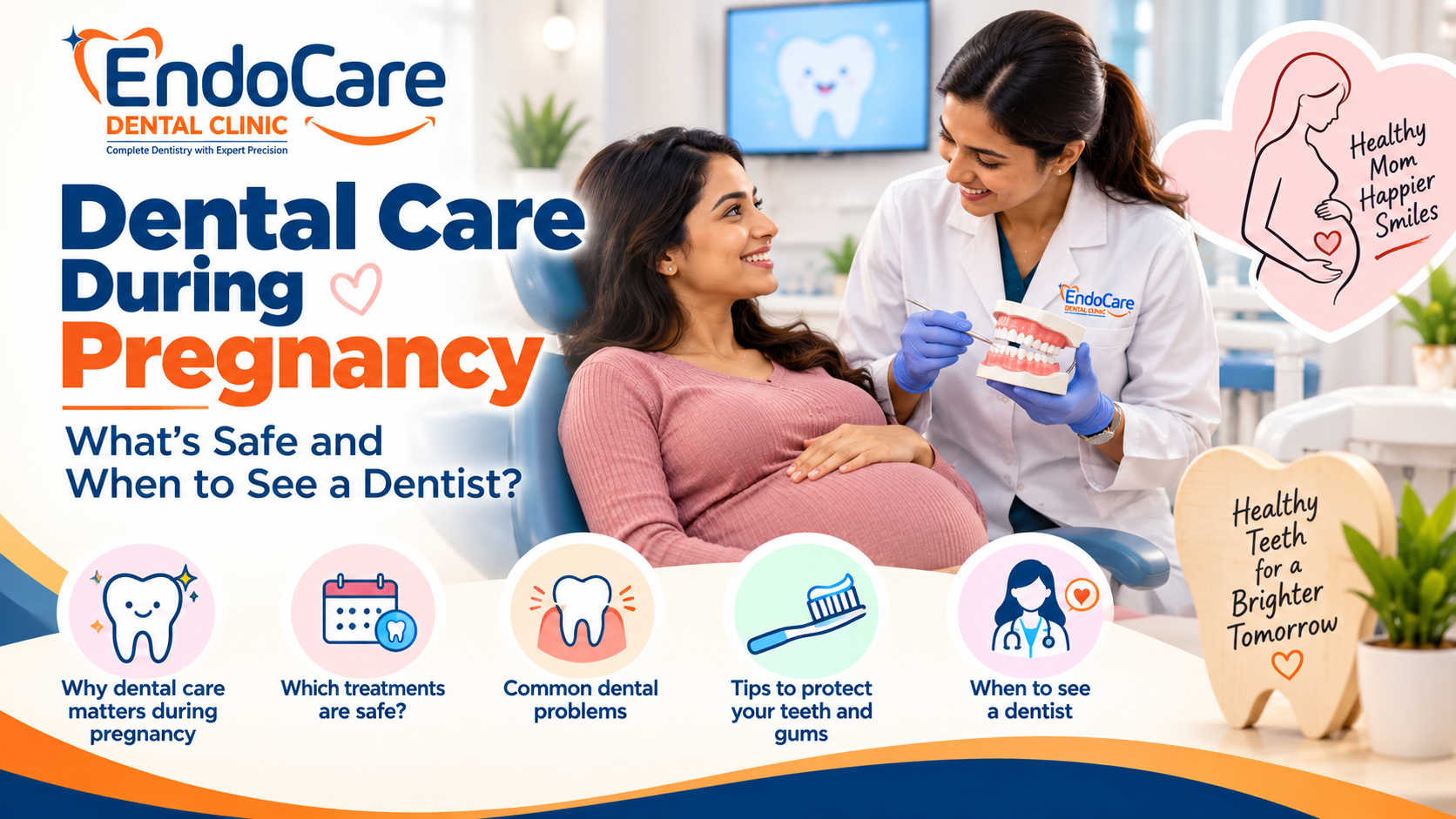
Dental Care During Pregnancy: What's Safe and When to See a Dentist
Pregnancy brings many changes to the body, and your oral health deserves attention during this time. Hormonal changes, morning sickness, altered eating habits and changes in daily routines can affect your teeth and gums.
Yet many expectant mothers hesitate to visit a dentist because they worry about dental X-rays, local anaesthesia, professional cleaning or treatment during pregnancy.
The reassuring news is that preventive, diagnostic and necessary restorative dental care can generally be provided during pregnancy when clinically indicated. Dental problems should not automatically be left untreated until after delivery. The appropriate treatment and any medication decisions should be based on your individual circumstances and discussed with your dental team. American Dental Association
If you are looking for information about dental care during pregnancy in Viman Nagar, Pune, this guide explains the oral-health changes to watch for, which treatments may be appropriate and when you should seek professional advice.
In This Article
- Why dental care matters during pregnancy
- Is dental treatment safe during pregnancy?
- Common dental problems during pregnancy
- How to protect your teeth and gums
- When to see a dentist
- Dental care in Viman Nagar, Pune
- Frequently asked questions
Publishing note: Convert these section headings into clickable jump links in the website editor.
Why Dental Care Matters During Pregnancy
Pregnancy can affect oral health in several ways. Although these changes do not happen to everyone, recognising them early can help you maintain healthy teeth and gums.
1. Hormonal changes can affect your gums
Changes in hormone levels can make gum tissue respond more strongly to plaque, increasing the likelihood of inflammation.
You may notice:
- Red or swollen gums.
- Tenderness around the gumline.
- Bleeding while brushing or flossing.
- Increased gum sensitivity.
These symptoms may be associated with pregnancy gingivitis, but other causes are possible. Persistent bleeding or swelling deserves a dental assessment rather than being dismissed as a normal part of pregnancy.
2. Morning sickness can expose teeth to stomach acid
Repeated vomiting exposes the teeth to stomach acid, which can contribute to enamel erosion.
Enamel is the hard outer covering that protects your teeth. Repeated acid exposure can gradually weaken this surface.
If you experience morning sickness:
- Rinse your mouth with water after vomiting.
- Avoid brushing immediately after vomiting because acid-softened enamel may be more vulnerable to abrasion.
- Ask your dentist for personalised advice if vomiting is frequent or your teeth become sensitive.
- Discuss persistent vomiting with your obstetrician.
Your dental team can also advise on additional measures to reduce acid exposure. American Dental Association
3. Changes in eating habits may increase cavity risk
Some pregnant women experience food cravings, more frequent snacking or changes in appetite.
Frequent exposure to sugary foods and drinks can increase the risk of tooth decay. Nausea may also make regular brushing more difficult.
You do not need to follow a restrictive diet to protect your teeth. Instead, aim for balanced meals, limit frequent sugary snacks and maintain a consistent oral-hygiene routine.
4. Dry mouth may make oral care more challenging
Some people experience a dry mouth during pregnancy. If this happens, drinking water regularly and maintaining good oral hygiene may help.
Persistent dry mouth should be discussed with your dentist, particularly if you also develop sensitivity, difficulty eating or repeated cavities.
Is Dental Treatment Safe During Pregnancy?
Pregnancy does not automatically mean that dental treatment must be postponed.
Professional guidance supports preventive, diagnostic and restorative dental care throughout pregnancy. This includes necessary treatment for conditions such as tooth decay, gum disease and dental infection. Delaying a problem that needs treatment can sometimes make it more complicated. American Dental Association
The right approach is to tell your dentist that you are pregnant so the treatment plan can account for your medical history, stage of pregnancy, symptoms and any advice from your obstetrician.
Is professional teeth cleaning safe?
Professional dental cleaning may be recommended to remove plaque and hardened tartar and help manage gum inflammation.
Your dentist will assess your gums and decide whether routine cleaning or more specific periodontal treatment is appropriate.
Learn more about Teeth Cleaning & Scaling at EndoCare.
Are dental X-rays safe during pregnancy?
Dental X-rays may be needed to diagnose certain problems, such as cavities, infection or changes around a tooth's roots.
The American Dental Association states that dental radiographs can be taken when clinically indicated during pregnancy. Your dentist will determine whether imaging is necessary and follow the applicable radiation-safety procedures. American Dental Association
Tell the dental team about your pregnancy before imaging so they can consider your individual circumstances and explain the procedure.
Can local anaesthesia be used during pregnancy?
Local anaesthesia may be used for appropriate dental procedures during pregnancy.
The choice of anaesthetic and whether it is needed depend on the procedure and your medical circumstances. Inform your dentist about your pregnancy, allergies, medical conditions and current medicines.
Your dentist can consult your obstetrician when additional guidance is needed. American Dental Association
Should all elective dental procedures wait until after delivery?
Not necessarily. The timing depends on the type of procedure, urgency, your comfort and your individual health circumstances.
Some non-urgent procedures may be scheduled at a more comfortable time, but necessary treatment should not be automatically postponed solely because you are pregnant.
Discuss the benefits, limitations and timing of your proposed treatment with your dentist. If you have a high-risk pregnancy or specific medical concerns, coordination with your obstetrician may be appropriate.
Common Dental Problems During Pregnancy
Understanding the symptoms that deserve attention can help you seek care before a minor problem becomes more complicated.
Pregnancy gingivitis
Pregnancy gingivitis is gum inflammation associated with hormonal changes and the gums' response to plaque.
Possible signs include:
- Bleeding when brushing or flossing.
- Redness or swelling around the gums.
- Tenderness when cleaning between the teeth.
- Persistent gum discomfort.
Continue gentle brushing and cleaning between your teeth rather than avoiding the affected area. If bleeding persists, arrange a dental examination.
Your dentist can determine whether you need improved home-care techniques, professional cleaning or additional gum treatment.
Explore Gum Treatment in Viman Nagar, Pune for information about professional assessment and periodontal care.
Tooth decay
Frequent sugary snacks, inadequate plaque removal and other individual risk factors may contribute to cavities during pregnancy.
Early cavities may not cause noticeable pain. A dental examination can identify decay and help determine whether preventive care, a filling or another treatment is appropriate.
If you have tooth sensitivity, a visible hole or pain while eating, do not assume that the symptom will disappear after delivery.
Enamel erosion from vomiting
Repeated exposure to stomach acid may gradually wear away enamel.
You might notice:
- Increased sensitivity to hot or cold foods.
- Changes in the appearance of your teeth.
- Smooth or worn-looking tooth surfaces.
- Discomfort when consuming acidic foods.
These symptoms can have other causes, so a dentist should assess any persistent changes.
Dental infection or severe toothache
Severe tooth pain, facial swelling, pus or fever accompanying dental symptoms can indicate a problem that needs prompt assessment.
Do not wait until after childbirth to seek advice about a suspected dental infection.
Difficulty breathing or swallowing, or rapidly spreading facial or neck swelling, requires emergency medical care.
How to Protect Your Teeth and Gums During Pregnancy
A few practical habits can help you maintain oral health throughout pregnancy.
1. Brush twice a day
Brush twice daily for about two minutes using a soft-bristled toothbrush and fluoride toothpaste.
If brushing triggers nausea, consider discussing practical adjustments with your dentist, such as using a smaller toothbrush head or changing the time you brush.
Do not abandon brushing altogether because of morning sickness.
2. Clean between your teeth daily
Floss or use an appropriate interdental cleaning aid to remove plaque from areas your toothbrush cannot easily reach.
If your gums bleed repeatedly, seek advice about the cause and the best cleaning technique for you.
3. Rinse after vomiting
Rinse with water after vomiting and avoid brushing immediately afterwards.
If vomiting is frequent, speak with your obstetrician and dentist about protecting your teeth from repeated acid exposure. American Dental Association
4. Reduce frequent sugary snacks
Try to limit how often you consume sugary foods and drinks throughout the day.
Choose balanced meals and drink water regularly. If pregnancy-related nausea makes eating difficult, seek dietary guidance from your healthcare professional rather than imposing unnecessary restrictions.
5. Keep up with dental check-ups
Routine examinations help identify problems that may not yet cause symptoms.
Your dentist can assess your gums, teeth and oral hygiene, recommend appropriate preventive measures and determine whether any treatment is needed.
The timing of follow-up visits depends on your oral health, risk factors and clinical findings.
6. Tell your dentist about medicines and medical conditions
Before treatment, let your dentist know:
- How far along your pregnancy is.
- Whether your obstetrician has identified any specific concerns.
- Which prescription medicines and supplements you take.
- Whether you have allergies or other medical conditions.
- Whether you have experienced vomiting, swelling, bleeding or tooth pain.
Do not start, stop or change prescribed medicines based on dental advice from an online article. Medication decisions during pregnancy should be made with the appropriate healthcare professional.
When Should You See a Dentist?
Arrange a dental appointment if you notice persistent gum bleeding, swelling, tooth sensitivity, visible cavities or discomfort while eating.
You should seek prompt dental advice for:
- Severe or persistent toothache.
- Facial or gum swelling.
- Pus or a suspected dental abscess.
- A broken tooth.
- Fever accompanying dental symptoms.
- Pain that interferes with eating or sleeping.
If you have breathing or swallowing difficulty, or rapidly spreading facial or neck swelling, seek emergency medical care immediately.
Remember that dental pain does not always indicate that a root canal is necessary. The correct treatment depends on the cause of the problem and the findings of a clinical examination.
Dental Care During Pregnancy in Viman Nagar, Pune
Expectant mothers looking for a dental consultation can seek an assessment at EndoCare Dental Clinic in Viman Nagar, Pune.
The clinic provides dental care based on individual clinical findings, with treatment planning that takes the patient's symptoms and needs into account.
Depending on the diagnosis, your dentist may recommend preventive care, professional cleaning, gum treatment, a filling or another appropriate procedure.
If you are pregnant, mention this when booking your appointment and inform the dentist of any relevant medical advice from your obstetrician.
EndoCare Dental Clinic serves patients from Viman Nagar and nearby areas, including Kalyani Nagar, Wadgaon Sheri, Kharadi and Dhanori. These are nearby service areas served by the Viman Nagar clinic, not separate EndoCare branches.
Book a dental consultation
EndoCare Dental Clinic
Near Datta Mandir Chowk, Parijat Mithai Building, 1st Floor, Sai Apex, Viman Nagar Road, Viman Nagar, Pune, Maharashtra 411014
Phone: +91 90968 82602
Hours: Open all seven days, 10:00 AM–9:00 PM
To discuss your dental concerns or request an appointment, visit the EndoCare Dental Clinic contact page.
Frequently Asked Questions About Dental Care During Pregnancy
1. Is it safe to visit a dentist during pregnancy?
Yes. Preventive, diagnostic and necessary restorative dental care can generally be provided during pregnancy. Tell your dentist that you are pregnant so your care can be planned according to your symptoms and medical circumstances. American Dental Association
2. Can I get my teeth cleaned during pregnancy?
Professional teeth cleaning may be appropriate during pregnancy. Your dentist can assess your gums and determine whether routine cleaning or additional periodontal treatment is needed.
3. Are dental X-rays safe for pregnant women?
Dental X-rays may be taken when clinically indicated. Inform your dentist about your pregnancy so the need for imaging and appropriate safety procedures can be considered. American Dental Association
4. What should I do if my gums bleed during pregnancy?
Continue gentle brushing and cleaning between your teeth, and arrange a dental assessment if bleeding persists or recurs. Hormonal changes can make the gums more sensitive to plaque, but persistent bleeding should not automatically be attributed to pregnancy. American Dental Association
5. Should I wait until after delivery to treat a cavity?
Not necessarily. Your dentist can assess the cavity and determine the appropriate treatment and timing. Delaying necessary dental treatment may allow a problem to become more complicated. ACOG
6. What can I do about tooth sensitivity after morning sickness?
Rinse your mouth with water after vomiting and avoid brushing immediately afterwards. If sensitivity persists, arrange a dental assessment to identify the cause. Discuss frequent vomiting with your obstetrician as well. American Dental Association
7. When should a pregnant woman seek urgent dental care?
Seek prompt dental advice for severe toothache, swelling, pus or fever accompanying dental symptoms. Difficulty breathing or swallowing, or rapidly spreading facial or neck swelling, requires emergency medical care.
Keep Your Smile Healthy Throughout Pregnancy
Pregnancy is an important time to pay attention to your oral health, not a reason to ignore dental symptoms.
Regular dental care, consistent brushing and interdental cleaning, and early attention to problems can help protect your teeth and gums. If you need treatment, your dentist can explain the appropriate options and coordinate with your obstetrician when necessary.
If you are looking for dental care during pregnancy in Viman Nagar, Pune, contact EndoCare Dental Clinic to discuss your concerns and arrange an assessment.
EndoCare Dental Clinic | Complete Dentistry with Expert Precision
Medical disclaimer: This article is for general educational purposes only and is not a substitute for an individual dental examination, diagnosis or treatment plan. Treatment and medication decisions during pregnancy should be made with the appropriate healthcare professionals.
This article is general information from the EndoCare Dental Clinic team. It is not a diagnosis or a substitute for an examination by your dentist. Please consult a dentist for advice about your own teeth.