Does a root canal hurt? What actually happens, step by step
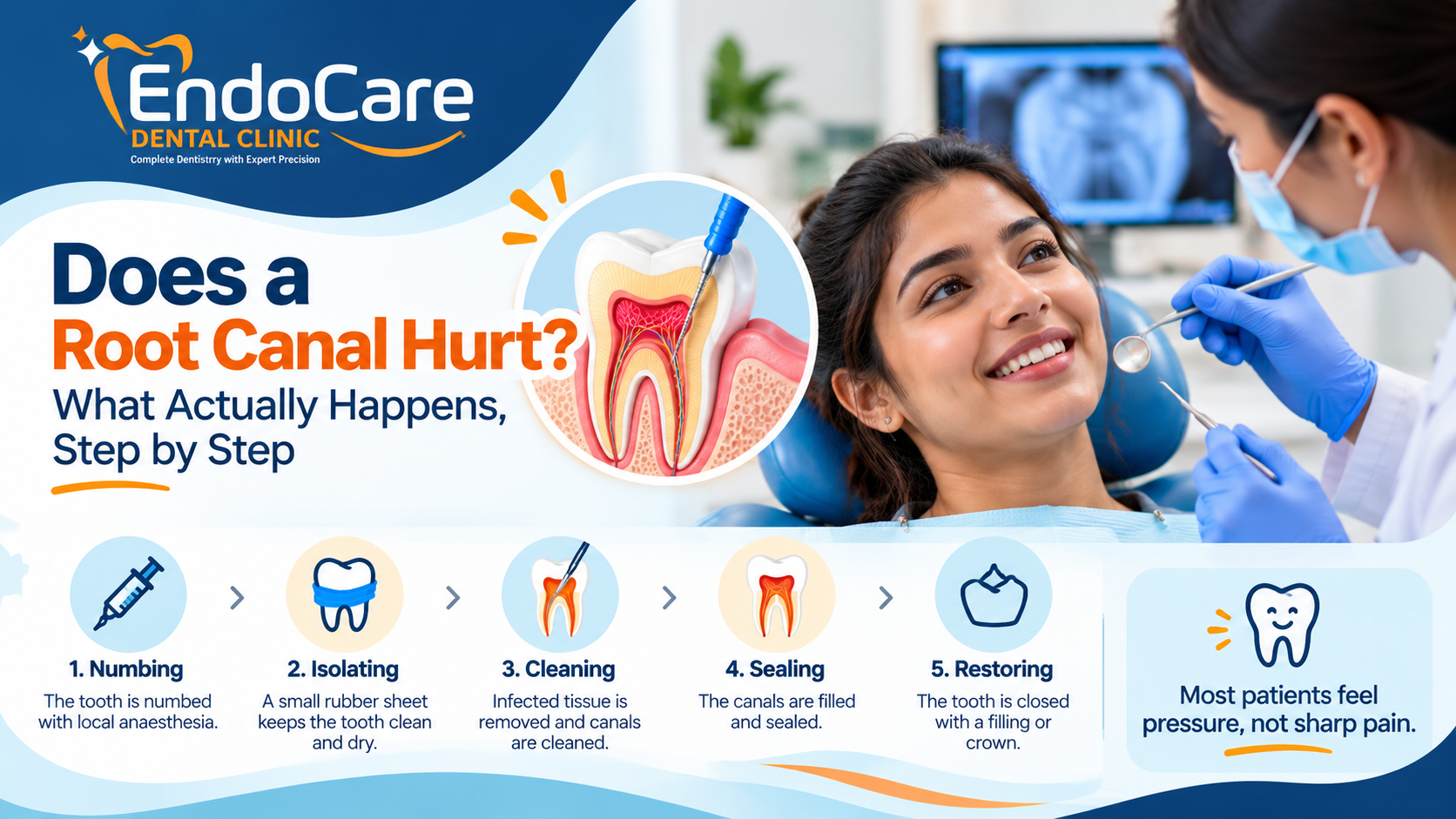
Does a Root Canal Hurt? What Actually Happens, Step by Step
Most people fear the root canal more than the toothache that brings them to the dentist. In reality, root canal treatment is designed to treat the source of pain and help save your natural tooth. With appropriate local anaesthesia, most patients experience pressure or vibration rather than sharp pain during the procedure.
If you have been searching for painless root canal treatment in Viman Nagar, Pune, understanding what happens during the appointment can help you feel more confident about getting your tooth checked.
At EndoCare Dental Clinic, Viman Nagar, Pune, Dr. Mugdha Bichile Pimplapure (BDS, MDS), Conservative Dentist and Microscopic Endodontist, assesses the tooth and explains the recommended treatment. Dental loupes are used during root canal treatment to support magnified visual assessment.
Here is what the treatment involves, what you may feel during each step, and how to care for your tooth afterwards.
Why Does a Tooth Need Root Canal Treatment?
Inside every tooth is soft tissue called the dental pulp, which contains nerves and blood vessels. Deep tooth decay, a crack, repeated dental procedures or an injury can allow bacteria to reach this tissue.
When the pulp becomes irreversibly inflamed or infected, it may cause persistent toothache, prolonged sensitivity to hot or cold, pain while biting or swelling around the tooth.
Root canal treatment removes the affected pulp, cleans the inside of the tooth and seals the root canals. The aim is to eliminate the source of infection or inflammation and preserve your natural tooth whenever possible.
If you have persistent toothache or sensitivity, explore Root Canal Treatment in Viman Nagar, Pune at EndoCare Dental Clinic. Replace this homepage destination with the exact root canal treatment page URL before publishing.
What Happens During a Root Canal Visit?
Understanding the root canal procedure step by step can make the experience less intimidating. Although the exact treatment varies depending on the tooth and the extent of infection, the main stages are generally similar.
1. Numbing the Tooth With Local Anaesthesia
The dentist numbs the affected tooth and surrounding area with local anaesthesia. The anaesthetic is given time to take effect, and the dentist checks that the area is sufficiently numb before starting treatment.
You may feel a brief pinch or stinging sensation when the injection is given. Once the area is numb, you should generally feel pressure or vibration rather than sharp pain.
If you experience discomfort during treatment, tell your dentist. Additional anaesthesia or other adjustments may be needed to improve your comfort.
2. Isolating the Tooth
A small rubber sheet, called a dental dam, may be placed around the tooth to keep it dry and help prevent saliva from entering the treatment area.
This helps maintain a clean working environment while the dentist treats the inside of the tooth.
3. Cleaning the Root Canals
The dentist makes a small opening in the tooth to reach the pulp chamber and root canals.
The infected or inflamed pulp is removed, and the canals are carefully cleaned, shaped and disinfected. The number of canals, their shape and the complexity of the infection can affect how long this stage takes.
At EndoCare Dental Clinic, dental loupes are used to support magnified visual assessment during root canal treatment.
4. Sealing the Root Canals
Once the canals have been adequately cleaned and prepared, they are filled with a suitable material and sealed to help prevent reinfection.
Depending on the condition of the tooth and the treatment plan, the dentist may complete the root canal in one appointment or recommend additional visits.
5. Restoring the Tooth
After the root canal, the opening in the tooth needs to be sealed with an appropriate restoration.
Some teeth can be restored with a filling, while others may need an onlay or crown to provide additional protection. The decision depends on how much healthy tooth structure remains and which tooth has been treated.
Ask your dentist whether Dental Crowns and Bridges may be appropriate after your root canal. Update this link to the exact crowns-and-bridges treatment page before publishing.
What Does a Root Canal Feel Like?
With adequate local anaesthesia, most patients should experience pressure, vibration or movement rather than sharp pain during root canal treatment.
You may notice:
-
Pressure from the dental instruments
-
Vibration while the dentist cleans the tooth
-
Sounds from the equipment
-
Temporary numbness around the treated area
Many patients find the experience comparable to having a dental filling, although root canal treatment may take longer.
If you feel sharp pain or significant discomfort, tell your dentist immediately. You should not feel that you have to endure it.
For patients looking for root canal treatment in Viman Nagar, Pune, discussing anxiety, previous experiences with dental treatment and concerns about injections before the appointment can help the dentist plan for comfort.
Does a Root Canal Hurt Afterwards?
Some tenderness or sensitivity when biting may occur for a few days after root canal treatment, particularly if the tooth was painful or inflamed before the procedure.
This discomfort generally improves over time. Your dentist may recommend appropriate pain relief and provide instructions based on your individual needs.
To support recovery:
-
Avoid chewing hard foods on the treated side until your dentist advises that it is safe.
-
Take medication only as directed by your dentist or healthcare professional.
-
Continue brushing and maintaining oral hygiene carefully.
-
Attend follow-up appointments for the recommended permanent restoration.
Contact your dentist if you develop swelling, severe or worsening pain, or symptoms that are not improving as expected. Also contact the clinic if your bite feels unusually high or a temporary filling comes loose.
After Root Canal Treatment: Why Might You Need a Crown?
A root canal treats the inside of the tooth, but the tooth still needs an appropriate restoration to protect and seal it.
Back teeth, particularly molars, may need a crown because they experience substantial chewing forces and can have significant loss of tooth structure. However, a crown is not automatically necessary for every root-canal-treated tooth; the dentist will assess the remaining structure and recommend the most suitable option.
The final restoration may be completed during the same appointment or at a later visit, depending on the case.
Learn more about Dental Crowns and Bridges at EndoCare Dental Clinic. Replace the homepage link with the relevant live treatment page before publishing.
Is It Better to Remove the Tooth Instead of Getting a Root Canal?
Extraction can seem like the simpler option when a tooth is painful. However, removing a tooth creates a gap that may affect chewing and, in some cases, the position of neighbouring teeth.
Depending on the location and condition of the missing tooth, replacement options may include a dental implant, bridge or denture. These options involve additional planning, time and cost.
When a tooth can be predictably saved, preserving the natural tooth with root canal treatment may be a suitable option. However, saving every tooth is not possible. A tooth that is severely fractured, extensively damaged or has a poor prognosis may need extraction.
Your dentist can explain the benefits, limitations and expected costs of both options before you decide.
Read Root Canal Treatment vs Tooth Extraction to learn more. Replace this placeholder with the actual comparison article URL if the blog is published.
When Should You See a Root Canal Specialist?
Do not ignore persistent toothache, prolonged sensitivity to hot or cold, pain while chewing or swelling around a tooth. Early assessment can help determine whether root canal treatment or another procedure is needed.
If you are searching for a root canal specialist in Viman Nagar, Pune, EndoCare Dental Clinic can assess your symptoms and explain the available treatment options.
The clinic is conveniently located for patients travelling from nearby areas such as Kalyani Nagar, Wadgaon Sheri, Kharadi and Dhanori.
Frequently Asked Questions
1. Does a root canal hurt during the procedure?
Root canal treatment is generally performed under local anaesthesia to minimise pain. Most patients experience pressure or vibration rather than sharp pain. Tell your dentist if you experience discomfort so the anaesthesia and treatment approach can be reassessed.
2. Is root canal treatment painful in Viman Nagar, Pune?
The aim of root canal treatment is to keep you comfortable while treating the affected tooth. At a dental clinic in Viman Nagar, Pune, your dentist will assess the tooth, administer local anaesthesia and explain what to expect during the procedure.
3. Does the injection for a root canal hurt?
You may feel a brief pinch or stinging sensation when the local anaesthetic is administered. This usually lasts a short time, and the dentist checks that the area is sufficiently numb before proceeding.
4. How long does pain last after a root canal?
Some tenderness may occur for a few days and should generally improve. Recovery varies by patient and by the condition of the tooth. Contact your dentist if the pain becomes severe or continues to worsen.
5. Do I always need a crown after a root canal?
No. The recommended restoration depends on the tooth's location, how much healthy structure remains and the forces it experiences during chewing. Your dentist will determine whether a filling, onlay or crown is appropriate.
6. Is root canal treatment better than tooth extraction?
If the tooth can be predictably restored, root canal treatment may help preserve your natural tooth. Extraction may be necessary when the tooth cannot be saved. Your dentist can explain which option offers the most suitable prognosis.
7. Can I return to work after a root canal?
Many patients return to their usual activities the same day, depending on how they feel and the treatment performed. Follow your dentist's instructions and take care while the area remains numb.
8. Where can I get root canal treatment near Kalyani Nagar or Kharadi?
EndoCare Dental Clinic is located in Viman Nagar, Pune, and may be convenient for patients travelling from Kalyani Nagar, Wadgaon Sheri and Kharadi. Contact the clinic to arrange an assessment and discuss your treatment needs.
Book Your Root Canal Consultation in Viman Nagar, Pune
A root canal does not have to be the frightening experience many people imagine. With appropriate local anaesthesia, careful treatment and clear aftercare instructions, the goal is to manage discomfort while treating the problem and preserving your natural tooth whenever possible.
At EndoCare Dental Clinic, Dr. Mugdha Bichile Pimplapure (BDS, MDS), Conservative Dentist and Microscopic Endodontist, assesses your tooth and explains the recommended treatment and restoration options.
If you have persistent toothache, prolonged sensitivity or have been advised to undergo root canal treatment, arrange a consultation to understand your options.
EndoCare Dental Clinic
Near Datta Mandir Chowk, Parijat Mithai Building, 1st Floor, Sai Apex, Viman Nagar Road, Viman Nagar, Pune 411014
Phone: +91 90968 82602
Clinic hours: Open all 7 days, 10:00 AM–9:00 PM
Contact EndoCare Dental Clinic to Book an Appointment
This article is general information from the EndoCare Dental Clinic team. It is not a diagnosis or a substitute for an examination by your dentist. Please consult a dentist for advice about your own teeth.