Bad Breath Treatment in Viman Nagar, Pune | EndoCare Dental Clinic
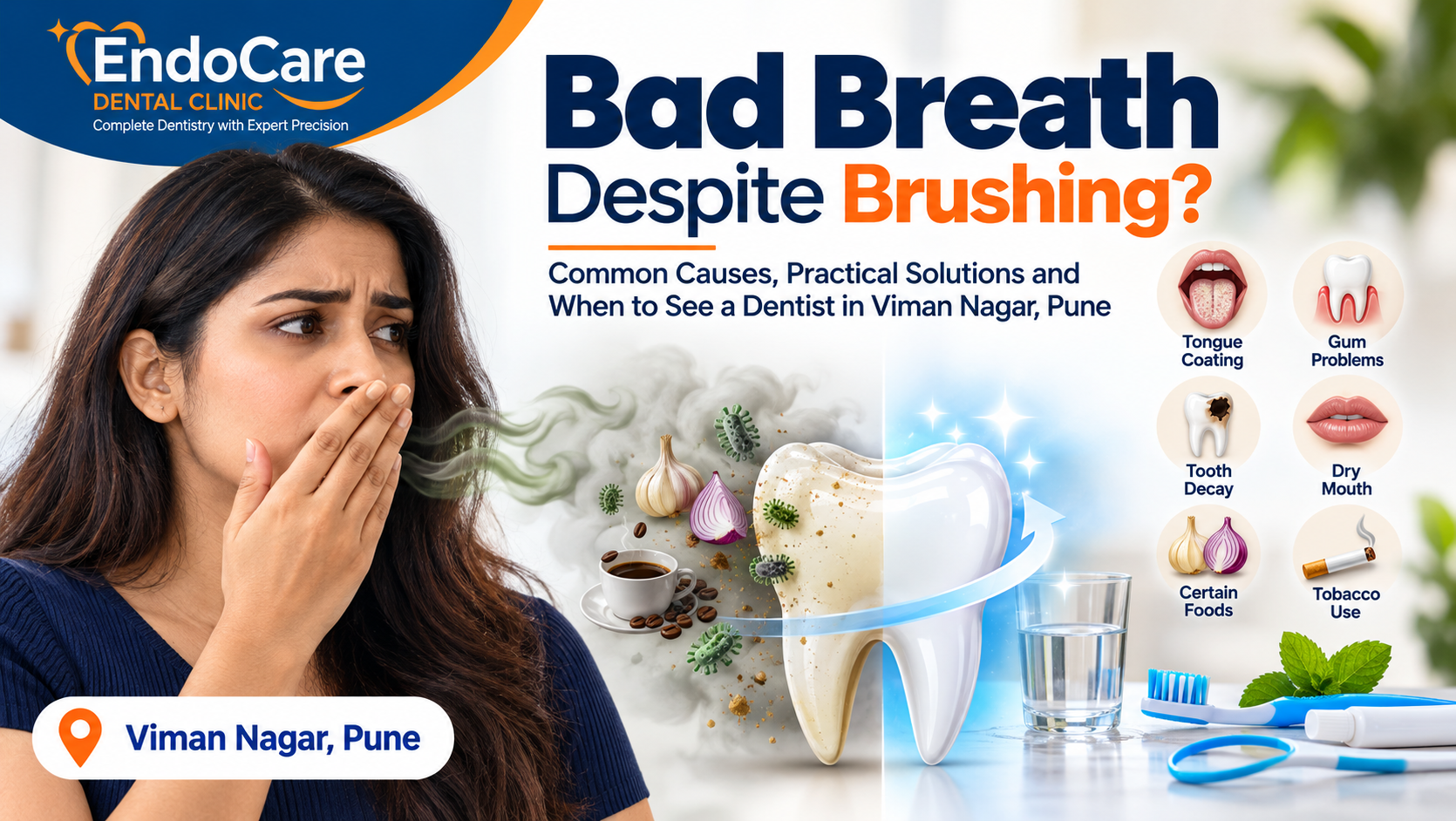
Bad Breath Despite Brushing? Causes, Solutions and When to See a Dentist in Viman Nagar, Pune
Do you brush your teeth regularly but still notice an unpleasant smell from your mouth? Persistent bad breath can be frustrating, particularly when you are already following a daily oral hygiene routine.
Bad breath, medically known as halitosis, can have several causes. Bacteria accumulating on the tongue, food trapped between teeth, gum problems, tooth decay and dry mouth are among the possibilities. Certain foods, tobacco use and some medical conditions can also contribute.
Simply using mouthwash or chewing mint-flavoured gum may temporarily mask the smell without addressing its underlying cause.
If you are experiencing persistent bad breath in Viman Nagar, Pune, understanding the possible reasons can help you decide what to change in your daily routine and when to seek professional advice.
At EndoCare Dental Clinic in Viman Nagar, dental assessment can help identify oral health problems that may be contributing to bad breath and determine whether further treatment is appropriate.
In This Article
- What Is Persistent Bad Breath?
- Why Do You Have Bad Breath Even After Brushing?
- How to Reduce Bad Breath at Home
- When Should You See a Dentist?
- How Can a Dentist Help With Persistent Bad Breath?
- Frequently Asked Questions
- Book a Dental Consultation in Viman Nagar, Pune
What Is Persistent Bad Breath?
Bad breath refers to an unpleasant odour coming from the mouth. It can happen occasionally after eating strongly flavoured foods, waking up in the morning or going for a long period without eating.
Persistent bad breath is different because the odour continues or repeatedly returns despite routine oral hygiene.
In many cases, the source is within the mouth. However, dry mouth, certain medications and conditions affecting the nose, throat or digestive system may also contribute.
The important distinction is whether the odour is temporary or continues despite reasonable oral hygiene measures. Persistent symptoms deserve attention rather than repeated attempts to cover them up.
Why Do You Have Bad Breath Even After Brushing?
Brushing is essential for oral health, but it does not remove every source of odour. Several factors may explain why bad breath continues.
1. Bacteria Accumulating on the Tongue
The tongue has a textured surface where bacteria, food debris and dead cells can accumulate. These bacteria may produce unpleasant-smelling compounds.
Brushing your teeth without cleaning your tongue may therefore leave an important source of bad breath unaddressed.
Gently cleaning the tongue once a day, using a toothbrush or tongue cleaner, can help reduce this accumulation.
Avoid scraping aggressively, as excessive pressure may irritate the tongue.
2. Food Particles Between the Teeth
Small food particles can remain trapped between teeth and around the gumline, even after brushing.
Bacteria break down this material and can produce unpleasant odours. Areas that are difficult to reach with a toothbrush may be particularly easy to overlook.
Cleaning between your teeth daily with dental floss or appropriately sized interdental brushes can help remove trapped debris.
If food repeatedly becomes stuck in the same area, a dental examination can help identify whether the area needs attention.
3. Gum Problems
Plaque accumulating around the gums can contribute to inflammation and gum disease. In some cases, this is associated with persistent bad breath or an unpleasant taste.
Possible accompanying signs include:
- Gums that bleed during brushing or flossing.
- Redness or swelling around the gums.
- Persistent unpleasant taste.
- Gum recession.
- Teeth that feel loose.
Gum disease does not always cause obvious discomfort in its early stages.
If you notice these symptoms alongside bad breath, consider arranging a dental assessment rather than relying on mouthwash alone.
Patients who need further information can explore Gum Treatment in Viman Nagar at EndoCare Dental Clinic.
4. Tooth Decay or Other Dental Problems
Cavities, damaged teeth and certain oral infections can contribute to unpleasant breath.
Food and bacteria may accumulate in areas affected by tooth decay, while an infection can produce an unpleasant taste or odour.
Other warning signs may include tooth sensitivity, pain when chewing, visible damage or swelling.
Bad breath alone cannot establish whether a cavity or infection is present. A dentist can examine the affected areas and recommend further investigation or treatment if necessary.
Do not ignore persistent bad breath accompanied by toothache, swelling or a persistent bad taste.
5. Dry Mouth
Saliva helps clear food particles and supports the mouth's natural cleaning processes. When saliva production decreases, odour-causing material may accumulate more easily.
Dry mouth can occur temporarily during sleep, contributing to morning breath. Persistent dryness may be associated with dehydration, mouth breathing, certain medications or underlying health conditions.
You might notice:
- A sticky or dry feeling in the mouth.
- Difficulty swallowing dry foods.
- A dry tongue.
- Frequent thirst.
- Bad breath that keeps returning.
Drinking water regularly may help when dehydration contributes to dryness. However, persistent dry mouth should be assessed, especially if it is affecting eating, speaking or oral comfort.
If you suspect that a medicine is causing dry mouth, speak with the prescribing clinician. Do not stop prescribed medication without medical advice.
6. Certain Foods and Tobacco Use
Garlic, onions and some strongly flavoured foods can temporarily affect breath odour.
Smoking and other tobacco use can also contribute to persistent bad breath and increase the risk of gum disease.
If you notice that the odour appears mainly after particular foods, the effect may be temporary. If it continues throughout the day or returns despite good oral hygiene, another contributing factor may need to be investigated.
7. Dental Appliances That Need Better Cleaning
Dentures and other removable dental appliances can collect food debris and bacteria if they are not cleaned properly.
People wearing braces or other orthodontic appliances may also find it more difficult to remove plaque from certain areas.
Follow the cleaning instructions appropriate to your appliance. If you wear dentures, clean them regularly and follow your dentist's advice about overnight removal and storage.
8. Nose, Throat or Other Health Conditions
Not every case of persistent bad breath originates in the teeth or gums.
Tonsil stones, sinus or throat problems, and acid reflux may contribute in some people. Certain systemic conditions can also affect breath odour.
If a dental examination does not identify an oral cause, your dentist may recommend discussing the symptoms with a doctor.
Avoid assuming that persistent bad breath automatically indicates a stomach problem. The appropriate next step depends on your symptoms and clinical assessment.
How to Reduce Bad Breath at Home
A consistent oral hygiene routine is a useful first step when trying to reduce bad breath.
These measures can help address common oral causes.
1. Brush Twice Daily
Brush your teeth gently for approximately two minutes, twice a day, using fluoride toothpaste.
Pay attention to the gumline and the surfaces of the back teeth. Avoid brushing so forcefully that your gums become irritated or bleed.
2. Clean Your Tongue Daily
Gently clean the surface of your tongue once a day.
A tongue cleaner or toothbrush can help remove accumulated debris. Start gently, particularly near the back of the tongue, and stop if cleaning causes pain or irritation.
3. Clean Between Your Teeth
Brushes cannot reach every surface between the teeth.
Use dental floss or suitable interdental brushes daily to remove trapped food and plaque. Your dentist can demonstrate an appropriate technique if you are unsure which method suits your teeth.
4. Drink Water Regularly
Maintaining adequate hydration can help when dry mouth is related to insufficient fluid intake.
If you experience persistent dryness despite drinking enough water, do not assume that dehydration is the only cause. Certain medications and medical conditions may also contribute.
Sugar-free chewing gum may stimulate saliva in some people, but it is not a substitute for assessing persistent dry mouth.
5. Keep Dental Appliances Clean
Follow the cleaning instructions for dentures, retainers and other removable appliances.
If you wear braces, pay attention to areas around brackets and wires where plaque can collect.
Ask your dentist for appliance-specific advice rather than using household cleaning products or abrasive substances that may damage the material.
6. Use Mouthwash for the Right Purpose
Mouthwash can be a useful addition to oral hygiene, depending on the product and your needs.
However, some mouthwashes mainly mask odour temporarily. Others contain ingredients intended to help control oral bacteria.
A mouthwash cannot repair tooth decay, remove established tartar or replace appropriate gum treatment.
If you have persistent bad breath, ask your dentist whether a particular mouthwash is suitable instead of repeatedly changing products without identifying the cause.
7. Avoid Tobacco and Identify Your Triggers
Tobacco can contribute to bad breath and increase oral health risks.
If you notice that certain foods consistently cause temporary odour, you can take that pattern into account. Nevertheless, do not attribute persistent symptoms to food alone without considering other causes.
If bad breath continues after a few weeks of consistent oral hygiene improvements, arrange a dental examination. You do not need to wait that long if you already have pain, swelling or other concerning symptoms.
When Should You See a Dentist?
Consider booking a dental consultation if:
- Bad breath persists despite improving your oral hygiene.
- The odour repeatedly returns throughout the day.
- You have an unpleasant taste that does not go away.
- Your gums bleed, appear swollen or feel tender.
- You suspect tooth decay or have persistent tooth sensitivity.
- You have dry mouth that continues over time.
- You notice a dental appliance is difficult to keep clean.
Seek urgent dental advice if bad breath is accompanied by significant dental pain, pus or suspected infection.
Facial or neck swelling accompanied by difficulty breathing or swallowing requires emergency medical care. Do not wait for a routine dental appointment if these symptoms occur.
If the dentist cannot identify an oral cause, further medical evaluation may be appropriate.
How Can a Dentist Help With Persistent Bad Breath?
The most useful approach is to identify what is contributing to the odour rather than simply trying to mask it.
At a dental appointment, the dentist may review your symptoms and oral hygiene routine, examine your teeth and gums, and assess areas where plaque or food debris may accumulate.
Depending on the findings, the recommended approach may include one or more of the following.
Professional Teeth Cleaning and Scaling
If plaque and hardened tartar are contributing to gum inflammation, professional cleaning may be recommended.
Brushing can remove plaque, but it cannot reliably remove hardened tartar. The type of cleaning required depends on the amount of accumulation and the condition of the gums.
Learn more about Teeth Cleaning and Scaling in Viman Nagar.
Gum Treatment
When gum disease is contributing to bad breath, the treatment plan depends on its severity.
It may involve improved home-care techniques, professional cleaning or deeper periodontal treatment when clinically indicated.
The dentist can also explain how to maintain gum health after treatment.
Treatment for Tooth Decay or Other Dental Problems
If the examination identifies a cavity, damaged tooth or another dental problem, treatment will depend on the specific diagnosis.
Not every patient with bad breath needs a dental procedure. The aim is to address any identified problem rather than recommend treatment without a clinical reason.
Advice for Dry Mouth or Persistent Symptoms
If dry mouth appears to be contributing to the problem, your dentist can discuss possible oral health measures and whether further medical assessment is appropriate.
If the cause appears unrelated to the mouth, a referral to another healthcare professional may be recommended.
At EndoCare Dental Clinic in Viman Nagar, Pune, the appropriate dental care depends on the findings of your individual examination.
Frequently Asked Questions About Bad Breath
1. Why do I have bad breath even after brushing twice a day?
Brushing does not necessarily remove all debris from the tongue or between the teeth. Gum problems, tooth decay, dry mouth and certain dental appliances may also contribute. If bad breath persists despite consistent oral hygiene, arrange a dental assessment.
2. Can a dentist help treat persistent bad breath?
Yes. A dentist can assess whether oral health problems, such as plaque accumulation, gum disease or tooth decay, may be contributing. Treatment depends on the findings. If no oral cause is identified, further medical evaluation may be appropriate.
3. Does bad breath always mean I have gum disease?
No. Bad breath has several possible causes, including tongue coating, food debris, dry mouth, strongly flavoured foods and some medical conditions. Gum disease is one possibility, but the cause cannot be determined from breath odour alone.
4. Can teeth cleaning and scaling help with bad breath?
Professional cleaning may help when plaque and hardened tartar contribute to gum inflammation or odour. However, cleaning does not address every possible cause of bad breath. Your dentist can determine whether scaling is appropriate.
5. Is mouthwash enough to stop persistent bad breath?
Not always. Some mouthwashes temporarily mask odour, while others can help control oral bacteria. If the underlying cause is tooth decay, gum disease or persistent dry mouth, additional assessment or treatment may be needed.
6. When should I visit a dentist for bad breath in Viman Nagar, Pune?
Arrange a consultation if bad breath continues despite improving your oral hygiene, repeatedly returns or is accompanied by an unpleasant taste, gum symptoms or dental discomfort. Seek urgent advice if you suspect a dental infection or develop significant swelling.
Book a Dental Consultation in Viman Nagar, Pune
Persistent bad breath can have several causes, and the right solution depends on identifying the underlying problem.
Improving tongue cleaning, brushing and interdental cleaning may help when oral hygiene is contributing. However, persistent symptoms deserve professional assessment rather than repeated attempts to cover the odour with mints or mouthwash.
If you are looking for a dentist in Viman Nagar, Pune, EndoCare Dental Clinic provides dental consultations and treatment based on individual clinical needs.
The clinic is located in Viman Nagar and serves patients from nearby areas, including Kalyani Nagar, Wadgaon Sheri, Kharadi and Dhanori.
Book a dental consultation at EndoCare Dental Clinic.
- Location: Viman Nagar, Pune
- Phone: +91 90968 82602
- Hours: Open all seven days, 10:00 AM–9:00 PM
- Appointments: Contact EndoCare Dental Clinic
Early assessment can help identify oral health problems that may be contributing to persistent bad breath and clarify which treatment, if any, is appropriate.
Medical disclaimer: This article provides general educational information and is not a substitute for an individual dental examination, diagnosis or treatment plan.
This article is general information from the EndoCare Dental Clinic team. It is not a diagnosis or a substitute for an examination by your dentist. Please consult a dentist for advice about your own teeth.