Tooth Extraction Aftercare: What to Do and Avoid After Tooth Removal in Viman Nagar, Pune
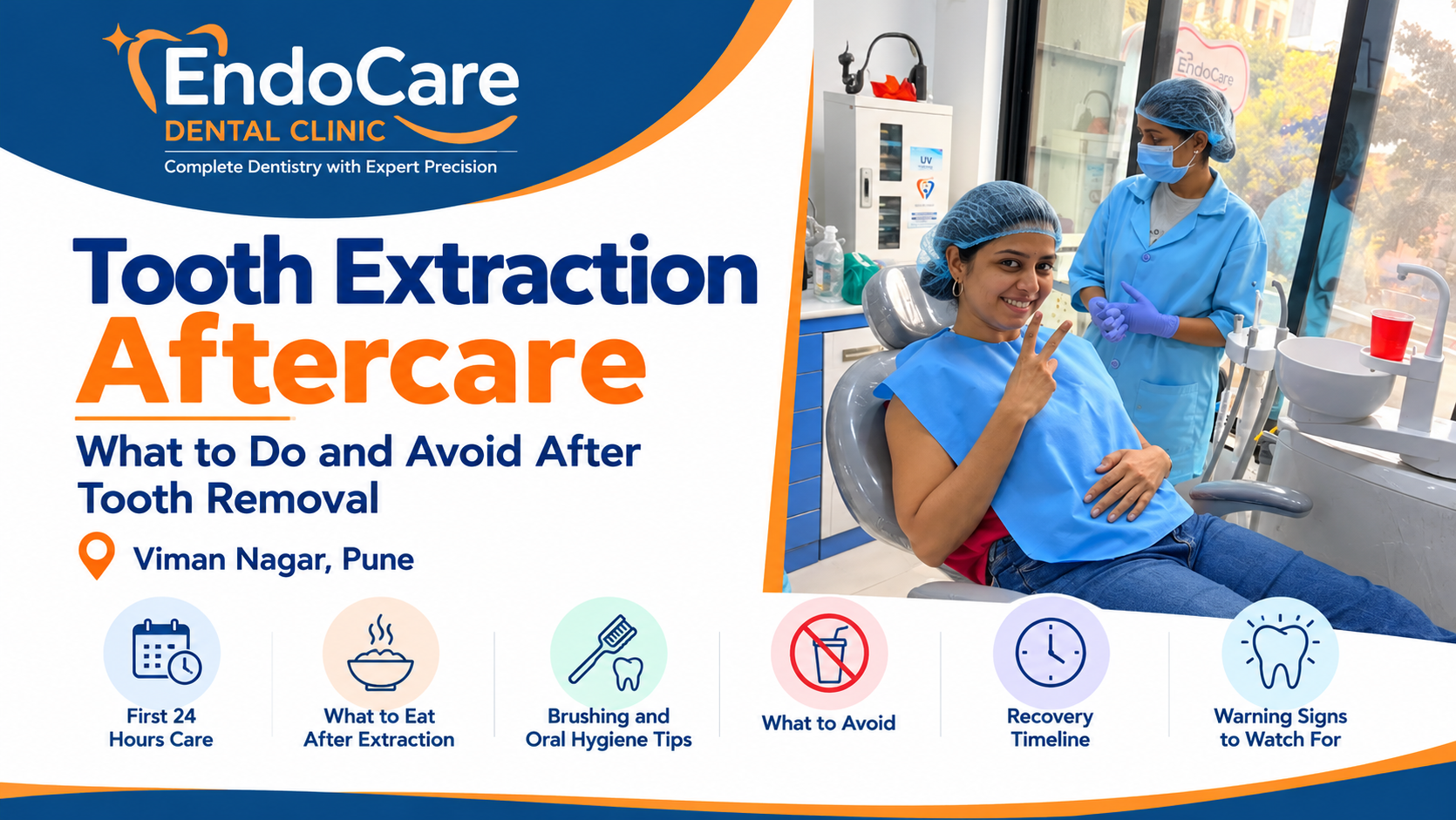
Tooth Extraction Aftercare: What to Do and Avoid After Tooth Removal in Viman Nagar, Pune
Having a tooth removed can leave you with questions about eating, brushing, bleeding, swelling and how long recovery might take.
Following the right tooth extraction aftercare instructions helps protect the extraction site while it heals. One of the most important steps is protecting the blood clot that forms in the socket where the tooth was removed. Disturbing this clot can cause renewed bleeding and may contribute to a painful condition called dry socket. UCL Hospitals NHS Trust
Whether you have undergone a simple tooth extraction or a more involved wisdom tooth removal, your recovery depends on the procedure, your general health and how well you follow your dentist's instructions.
At EndoCare Dental Clinic in Viman Nagar, Pune, patients can seek an assessment for damaged teeth, problematic teeth and wisdom teeth that may require removal. The clinic also provides guidance on protecting the extraction site and recognising symptoms that need professional attention.
This guide explains what to do after tooth extraction, what to avoid, which foods to choose and when to contact your dentist.
In This Article
- What Happens After a Tooth Extraction?
- What to Do in the First 24 Hours
- What to Eat After Tooth Extraction
- Brushing and Oral Hygiene After Tooth Removal
- What to Avoid After Tooth Extraction
- How Long Does Tooth Extraction Recovery Take?
- Signs of Dry Socket and Other Complications
- Tooth Extraction Aftercare at EndoCare Dental Clinic
- Frequently Asked Questions
What Happens After a Tooth Extraction?
After a tooth is removed, a small socket remains in the gum and underlying bone. A blood clot normally forms in this area and helps protect the tissues as healing begins.
Over time, the extraction site gradually heals. The gum tissue closes progressively, while the underlying bone undergoes a longer healing process.
Some discomfort, mild swelling and slightly blood-stained saliva can occur after an extraction. The amount of discomfort and the recovery period depend on factors such as the type of extraction, the position of the tooth and whether surgery was required.
The most important early goal is to protect the blood clot and avoid disturbing the extraction site.
Your dentist may give you specific instructions depending on whether you had a straightforward extraction, surgical extraction or wisdom tooth removal.
What to Do in the First 24 Hours After Tooth Extraction
The first 24 hours are particularly important for protecting the extraction site.
1. Protect the blood clot
Avoid touching the extraction site with your fingers, tongue or other objects. Do not repeatedly inspect the socket or attempt to remove anything from it.
Avoid forceful spitting, vigorous rinsing and using a straw during this initial period, as suction and pressure may disturb the clot.
2. Follow your dentist's instructions for bleeding
A small amount of blood in your saliva can occur after tooth removal.
If the site starts bleeding, sit upright and apply firm, continuous pressure by biting on the gauze provided by your dentist, following the instructions you were given.
Avoid repeatedly removing the gauze to check whether the bleeding has stopped.
If bleeding remains heavy or does not settle with sustained pressure, contact your dentist promptly. Do not wait until the next day if the bleeding is persistent.
3. Rest and avoid strenuous activity
Take it easy for the remainder of the day. Avoid strenuous exercise, heavy lifting and activities that could aggravate bleeding or discomfort.
The amount of rest required depends on the complexity of your extraction and your dentist's advice.
4. Be careful while your mouth is numb
Local anaesthesia can temporarily reduce sensation in your lips, cheeks and tongue.
Until the numbness wears off, avoid chewing and hot foods or drinks that could burn you without your noticing.
5. Take medicines only as directed
Follow the instructions provided by your dentist for any prescribed medicines or recommended pain relief.
Do not exceed the recommended dose or start leftover antibiotics without professional advice. If you take regular medicines that affect blood clotting, do not stop them without advice from the prescribing clinician.
What to Eat After Tooth Extraction
Choosing suitable foods can make eating more comfortable while protecting the extraction site.
Soft foods to consider
Depending on your comfort and your dentist's instructions, suitable options may include:
- Soft, lukewarm khichdi.
- Mashed potatoes.
- Scrambled eggs.
- Soft, well-cooked rice.
- Yogurt or curd, if tolerated.
- Smooth soups that are not too hot.
- Soft, well-cooked vegetables.
Choose foods that require minimal chewing, and chew on the opposite side of your mouth when possible.
Drink water normally, but avoid using a straw during the initial healing period.
Foods to avoid immediately after extraction
Avoid foods that are likely to irritate the site or place pressure on the clot, including:
- Very hot foods and drinks while the area is numb or actively bleeding.
- Hard foods such as brittle snacks.
- Sharp or crunchy foods that may injure the extraction site.
- Sticky foods that are difficult to clear from the mouth.
- Small, hard particles that may become trapped around the socket.
Your dentist may recommend a longer period of soft foods after a surgical extraction or wisdom tooth removal.
Practical tip: Return to your usual diet gradually as comfort improves, following your dentist's advice rather than forcing yourself to eat normally too soon.
Brushing and Oral Hygiene After Tooth Removal
Keeping your mouth clean is important, but cleaning must not disturb the healing socket.
During the first 24 hours
Avoid brushing directly over the extraction site. Follow your dentist's instructions regarding rinsing, spitting and cleaning during this initial period.
Do not use your toothbrush, fingers or other objects to probe the socket.
After the first 24 hours
You can generally resume gentle toothbrushing while taking care around the extraction site.
Your dentist may recommend gentle warm saltwater rinses after the first 24 hours. If advised, use a mild rinse and allow the liquid to move around your mouth without vigorous swishing or forceful spitting.
Continue to clean the other teeth carefully.
The precise instructions may differ following surgical extraction, so follow the guidance given by your treating dentist. UCL Hospitals NHS Trust
What to Avoid After Tooth Extraction
Certain habits can interfere with healing or increase the risk of complications.
1. Avoid smoking and vaping
Smoking and vaping can interfere with healing and are associated with an increased risk of dry socket. Avoid them during recovery and follow your dentist's advice on how long to refrain.
2. Do not use a straw too soon
The suction created when drinking through a straw may disturb the blood clot. Drink directly from a glass instead during the initial healing period.
3. Avoid vigorous rinsing and forceful spitting
These actions may dislodge the clot and restart bleeding, especially during the first 24 hours.
4. Do not touch or poke the socket
Avoid using your tongue, fingers, toothpicks or other objects to investigate the extraction site.
5. Do not ignore worsening symptoms
Some discomfort is expected, but pain that becomes significantly worse after initially improving deserves professional assessment.
Avoid self-diagnosing complications or applying home remedies directly to the extraction wound.
6. Do not change prescribed medicines without advice
Take prescribed medicines according to your dentist's instructions. If you experience a suspected adverse reaction or have concerns about a medicine, contact the prescribing clinician.
How Long Does Tooth Extraction Recovery Take?
There is no single recovery timeline that applies to every extraction.
Recovery depends on whether the tooth was fully erupted or impacted, whether surgical removal was necessary, the condition of the surrounding tissues and your individual healing response.
During the first day
You may experience mild bleeding or blood-stained saliva, tenderness and discomfort as the anaesthetic wears off.
Protecting the blood clot is especially important during this stage.
During the next few days
Some soreness and swelling may continue. After surgical extraction, swelling can be more noticeable and may take several days to settle.
Symptoms should generally begin improving rather than becoming progressively worse. Follow your dentist's advice on eating, oral hygiene and activity.
During the following weeks
The gum tissue continues to heal, while the underlying bone takes longer to remodel.
A visible depression at the extraction site may remain for a while. Do not attempt to clean it by inserting objects into the socket.
Your dentist can advise whether the site is healing as expected and whether a review appointment is necessary.
Signs of Dry Socket and Other Complications
Most extractions heal without major complications, but recognising warning signs can help you seek care promptly.
What is dry socket?
Dry socket, also called alveolar osteitis, can occur when the protective blood clot is lost or breaks down too early.
It can expose sensitive tissue within the socket and cause significant pain. The condition may develop a few days after tooth removal. Cleveland Clinic
Symptoms that may indicate dry socket
Contact your dentist if you notice:
- Severe or increasing pain a few days after extraction.
- Pain that radiates towards the ear or other parts of the jaw.
- An unpleasant taste or persistent bad breath.
- Pain that is not improving as expected.
These symptoms do not confirm dry socket on their own. A dental examination is needed to establish the cause and determine appropriate treatment.
When should you seek urgent help?
Contact your dentist urgently if you experience:
- Persistent or heavy bleeding.
- Increasing swelling or pain.
- Fever accompanying worsening symptoms.
- Pus or other signs suggesting infection.
- Difficulty opening your mouth that is worsening or concerning.
Seek emergency medical care immediately if you develop difficulty breathing or swallowing, or rapidly spreading swelling involving the mouth, face or neck.
Do not wait for a routine dental appointment if these emergency symptoms occur.
Tooth Extraction Aftercare at EndoCare Dental Clinic in Viman Nagar, Pune
Good aftercare begins with understanding the procedure performed and the specific instructions needed for your recovery.
At EndoCare Dental Clinic in Viman Nagar, Pune, patients can seek assessment for teeth that may require extraction, including teeth affected by extensive damage or decay and problematic wisdom teeth.
The clinic's tooth extraction process includes assessment, discussion of treatment options, appropriate aftercare guidance and review when healing is slower or more painful than expected. Endocare Dental Clinic
Patients considering tooth removal can explore:
- Tooth Extraction in Viman Nagar — for information about assessment and extraction of damaged or problematic teeth.
- Wisdom Tooth Removal in Viman Nagar — for information about assessment and removal of troublesome wisdom teeth.
EndoCare Dental Clinic is located in Viman Nagar and serves patients from nearby areas, including Kalyani Nagar, Wadgaon Sheri, Kharadi and Dhanori. These are surrounding areas served by the Viman Nagar clinic, not separate EndoCare branches. Endocare Dental Clinic
If you have recently undergone tooth extraction and are concerned about bleeding, pain, swelling or healing, contact the clinic for guidance.
Book a dental consultation with EndoCare Dental Clinic to discuss tooth extraction, wisdom tooth removal or concerns about your recovery.
Phone: +91 90968 82602
Clinic hours: Open all 7 days, 10:00 AM–9:00 PM
Appointments: Contact EndoCare Dental Clinic
Frequently Asked Questions About Tooth Extraction Aftercare
1. What should I do immediately after tooth extraction?
Follow your dentist's instructions, protect the blood clot, rest and apply pressure with the provided gauze if bleeding occurs. Avoid forceful rinsing, spitting and disturbing the socket during the first 24 hours.
2. What can I eat after tooth extraction?
Soft foods such as khichdi, mashed potatoes, scrambled eggs and soft rice may be suitable, depending on your comfort. Avoid hard, crunchy, sharp and very hot foods during the initial recovery period, and follow your dentist's instructions.
3. When can I brush my teeth after tooth removal?
You can generally resume gentle brushing while avoiding the extraction site during the first 24 hours. After that, clean carefully around the area and follow your dentist's instructions about rinsing and saltwater mouthwash.
4. How do I know if I have dry socket?
Dry socket may cause severe or increasing pain a few days after extraction, sometimes accompanied by an unpleasant taste or bad breath. These symptoms require dental assessment because other problems can cause similar symptoms.
5. Is swelling normal after tooth extraction?
Some swelling can occur, particularly after surgical extraction. However, rapidly increasing swelling, fever accompanying worsening symptoms, or difficulty breathing or swallowing requires urgent attention. Seek emergency medical care for breathing or swallowing difficulties.
6. Where can I get tooth extraction aftercare advice in Viman Nagar, Pune?
You can contact EndoCare Dental Clinic in Viman Nagar, Pune, to discuss concerns following an extraction and arrange an assessment if needed. Call +91 90968 82602 or use the clinic's official contact page.
Conclusion: Protect Your Smile With the Right Tooth Extraction Aftercare
Following your dentist's instructions after tooth removal can help protect the blood clot, support healing and reduce the risk of complications.
Remember to eat suitable soft foods, maintain careful oral hygiene, avoid smoking and straws during the initial recovery period, and seek advice if symptoms worsen instead of improving.
If you are looking for tooth extraction treatment in Viman Nagar, Pune, or need advice about recovery following wisdom tooth removal, EndoCare Dental Clinic can help you understand your options and the appropriate next steps.
Contact EndoCare Dental Clinic to arrange a consultation.
Website: https://endo-care.in
Phone: +91 90968 82602
Medical disclaimer: This article provides general educational information and is not a substitute for personalised post-operative instructions from your treating dentist. Follow the instructions provided for your specific procedure.
This article is general information from the EndoCare Dental Clinic team. It is not a diagnosis or a substitute for an examination by your dentist. Please consult a dentist for advice about your own teeth.